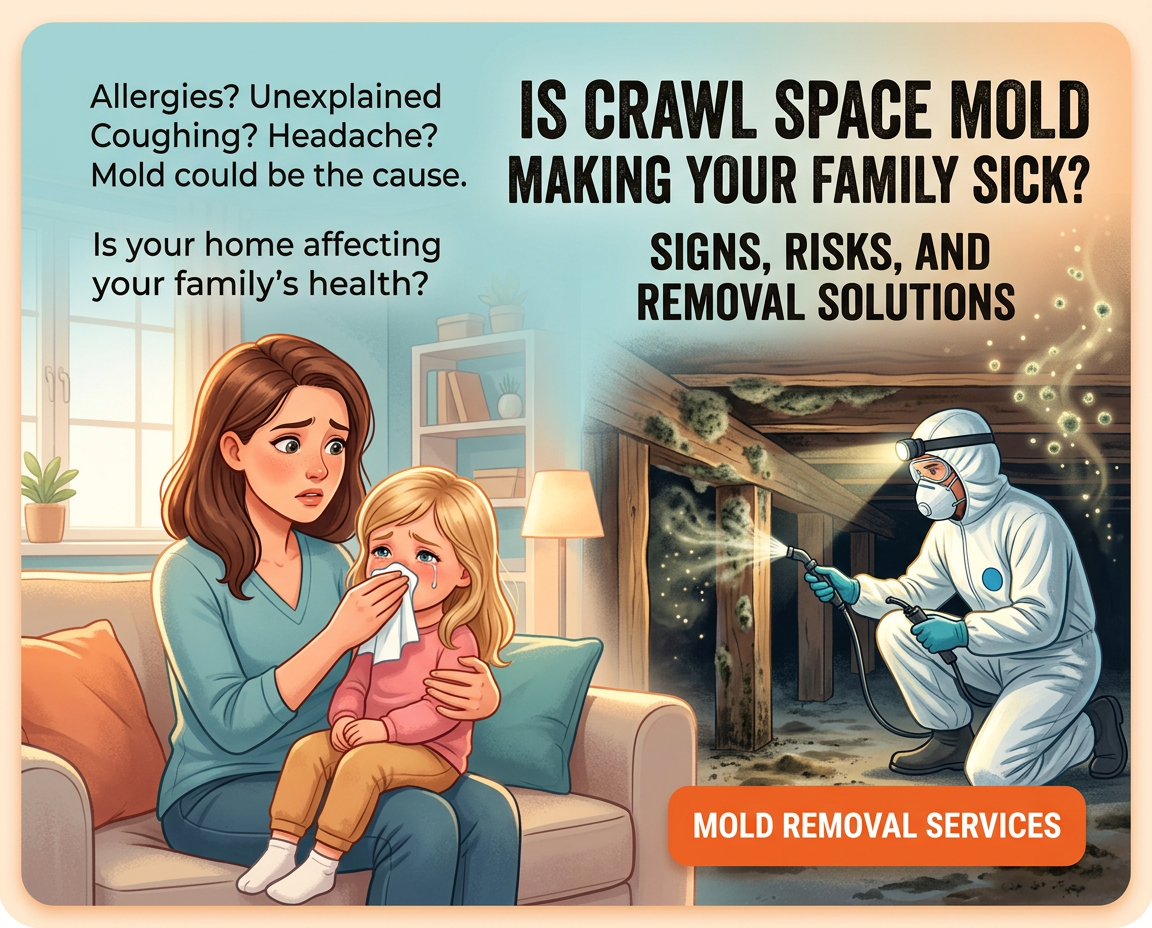
A cough that eases in the car and comes back in the living room is a clue about the house. So is a musty smell at the floor registers. In many Northwest Indiana homes, that air started in the crawl space. Mold on the joists and insulation can ride upstairs with it.
The U.S. Environmental Protection Agency says mold can irritate the eyes, skin, nose, throat, and lungs. In people who are sensitive to it, exposure can also bring on allergy symptoms or an asthma attack. Crawl space mold is a building problem with a health side. A doctor handles the symptoms. Mold removal handles the growth and the moisture that keeps it alive.
Symptoms That Follow You Home
Not everyone in the house reacts. People with allergies, asthma, or a weakened immune system are the ones most likely to feel it. In Portage and Valparaiso homes, these are the signs worth writing down:
- A stuffy nose, sneezing, coughing, or a scratchy throat that is worse indoors than outdoors
- Watery or red eyes, or a skin rash, that flares at home
- Asthma that is harder to control in the house than at school or work
- Headaches that arrive with the stuffiness and fade after a night away
- A musty smell in closets, at floor vents, or when the heat or air conditioning first comes on
Pollen does not turn off when you leave for the weekend and turn back on at the front door. If the symptoms track the house, look under the floor before you buy another air purifier for the bedroom.
This is not a diagnosis. A cough, wheeze, or breathing trouble that will not let up belongs with a physician. The crawl space is the part a contractor can see.
How Crawl Space Air Gets Upstairs
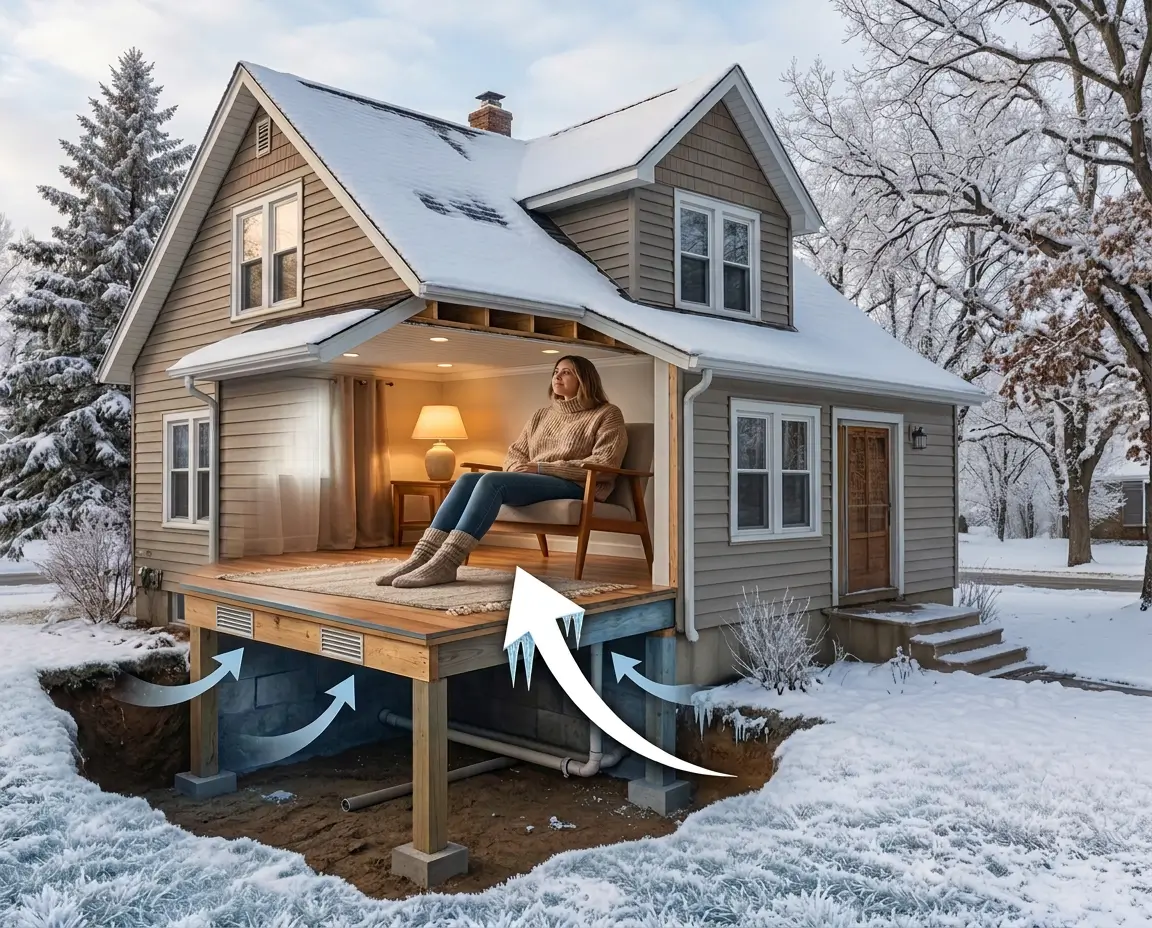
Warm air leaves through the upper part of the house. Replacement air is pulled in from the lowest level. That movement is the stack effect. As much as 40% of the air on the first floor can come from the crawl space. Gaps at the sill plate, holes around plumbing, and leaky ducts give it a path.
Spores and the musty odor travel with that air. You do not have to see mold on a bedroom wall for the crawl space to affect the rooms. The growth can stay on the joists while the air you breathe does not.
Northwest Indiana keeps that path damp. Humid summers, a high water table in low lots, and crawl space vents left open pull wet outdoor air across bare soil and wood. Mold needs that moisture. Dry wood does not grow it.
Signs the Mold Is Under the Floor
A flashlight at the access door is enough for a first look. Stay out of the crawl space if you already have trouble breathing in the house.
Look and smell for:
- A musty odor as soon as the door opens
- Black, green, or white fuzzy growth on the joists, the subfloor, or the rim joist
- Insulation that is wet, stained, hanging down, or matted
- Standing water, mud, or a water line on the foundation wall
- Condensation or rust on ducts and metal pipes
- A bleach smell over the same musty odor a few weeks after someone sprayed the wood
Cardboard boxes, stored clothes, and old carpet in that space hold moisture and give mold more to grow on. Haul them out. They are not the source if the joists are already wet.
What Untreated Mold Does
The same moisture affects the air upstairs and the wood under the floor.
The air. Irritants and allergens keep entering the living space while the growth and the damp air remain. A purifier upstairs filters what has already arrived. It does not stop the crawl space from sending more.
The wood and the insulation. Wet insulation no longer slows heat loss, and it holds water against the joists. Over enough wet seasons the wood softens and the floor can sag. That becomes a structural repair. It started as a moisture problem.
A cleaner sprayed on the surface, with the door shut afterward, leaves the dirt floor, the leaks, and the wet batts in place. The growth comes back. Sealing the crawl space over active mold traps that moisture behind the liner. Remediation comes before encapsulation.
How Removal Works
Crawl space mold removal follows the inspection. The order does not change:
- Inspect. We photograph the growth, list the materials involved, and trace the water. The source is ground vapor, standing water, wall seepage, open vents, or a plumbing leak.
- Remove. Contaminated insulation, debris, and material that cannot be cleaned come out and go to disposal. Moldy batts left in the joists keep spores in the floor.
- Treat. Framing and subfloor that stay in the house are treated so growth left on the wood is addressed.
- Dry the space. New growth needs water. The repair has to match where the water comes from.
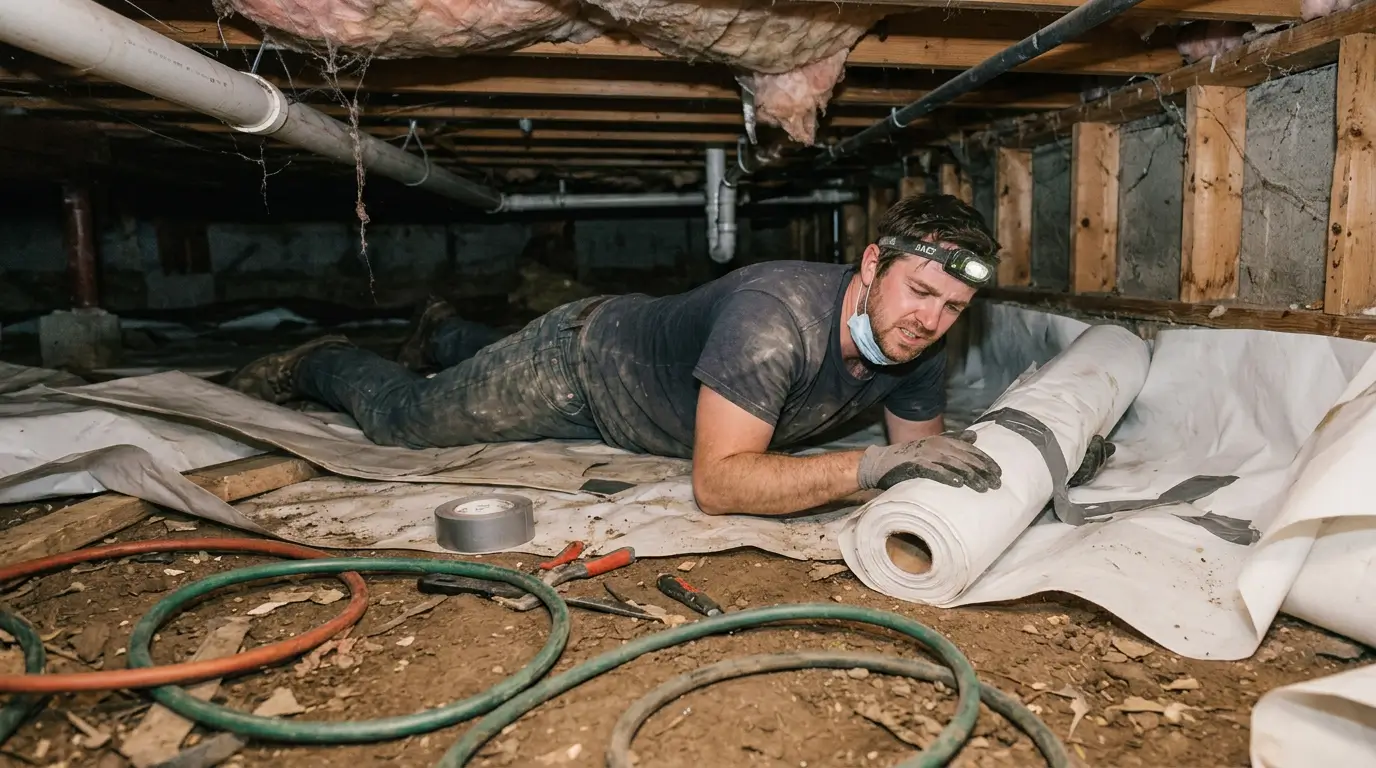
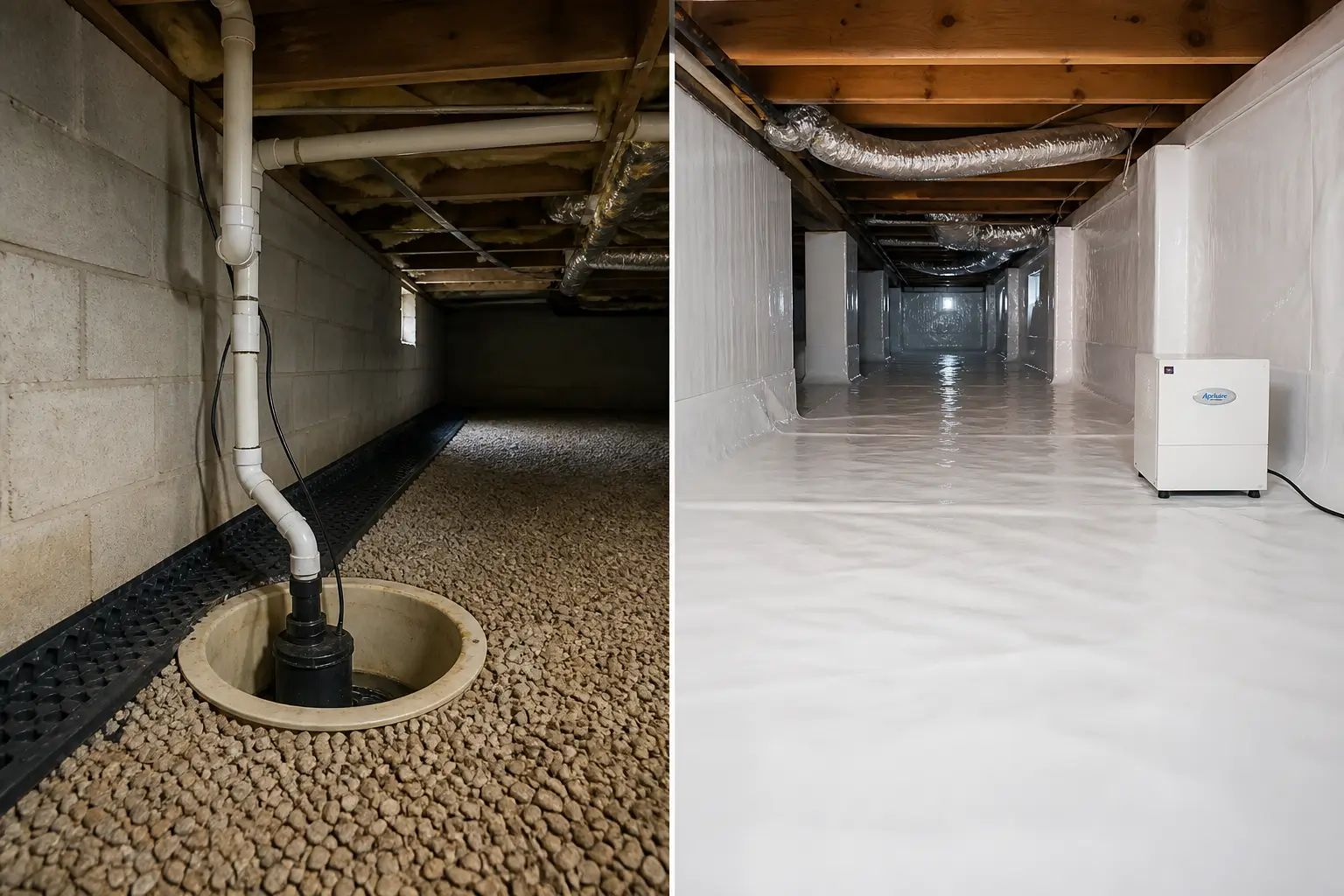
Bare soil and humidity, with no standing water. A sealed vapor barrier blocks vapor from the ground. Encapsulation waits until the mold is gone.
Water after rain, or a high water table. An interior drainage system collects that water and pumps it away from the house.
Seepage through the foundation walls. Waterproofing is what stops water moving through the concrete.
A plumbing leak. The leak is fixed before any liner goes down.
The price depends on how much material comes out, the size of the crawl space, how hard it is to reach, and whether drainage or structural work is part of the job. The number comes from the inspection.
What to Check Before You Call
- Do symptoms ease when the family is away overnight, and return the day you get home?
- Is there a musty smell at the crawl space door or the floor registers?
- From the access opening, can you see wet insulation, standing water, or visible growth?
- Has the space been sprayed before, with the smell back within a season?
A yes on the health pattern and a yes under the house is enough to book an inspection. You do not need to name the mold from a photo.
Northwest Crawl Space Repair inspects crawl spaces across Northwest Indiana, removes the affected material, and corrects the moisture so the growth does not have the water it needs.