Remediation & Prevention
Crawl Space Mold Removal
Remediation that fixes the moisture source—so mold stays gone in Northwest Indiana.
Northwest Indiana
Crawl Space Mold Remediation That Stays Gone
Mold in your crawl space is almost always a moisture problem—and sealing over it without fixing the source makes things worse. At Northwest Crawl Space Repair, we remediate affected materials, treat surfaces safely, and identify why mold grew in the first place: groundwater, humidity, leaks, or poor ventilation in Northwest Indiana homes.
Our team inspects the full picture during a free visit, scopes remediation clearly, and recommends drainage, waterproofing, or encapsulation so mold does not return after the crawl space is sealed. You get remediation tied to prevention—not a spray-and-seal shortcut.
Why Remediate
Benefits of Professional Mold Removal
Crawl space mold affects the air you breathe upstairs. Proper remediation removes the growth and addresses the moisture that caused it.
Healthier Indoor Air
Up to 40% of first-floor air can come from the crawl space. Removing mold reduces musty odors, allergens, and respiratory irritants upstairs.
Safe, Professional Remediation
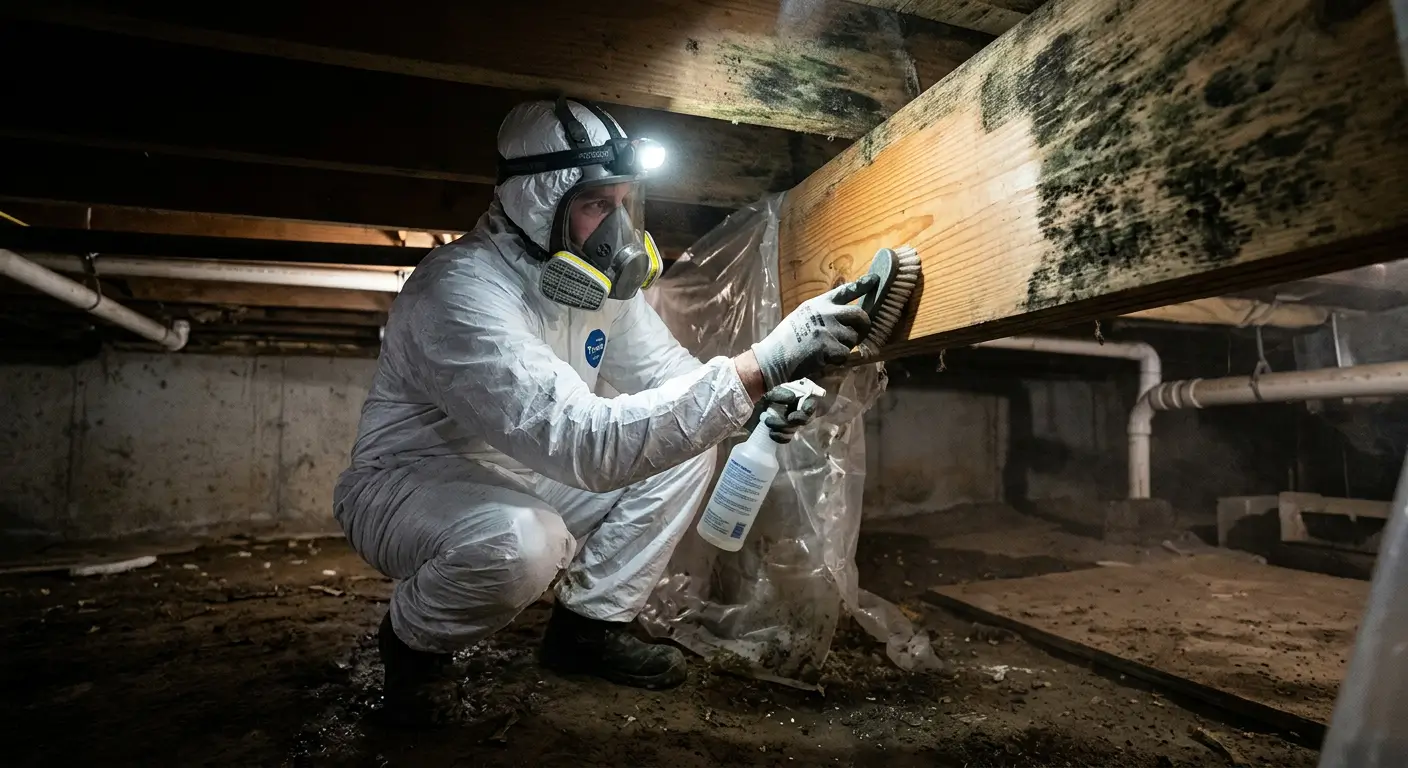
We follow proper containment and removal protocols—addressing affected materials without spreading spores through your home.
Fixes the Moisture Source
Mold returns if moisture remains. We identify and recommend drainage, waterproofing, or encapsulation so growth does not come back.
Protects Your Investment
Sealing over active mold traps moisture and worsens air quality. Remediation before encapsulation protects your home and your family.
Our Approach
What Goes Into Mold Remediation
Every project is scoped to your crawl space. These are the core steps we follow for remediation that supports long-term moisture control.
Mold Inspection & Assessment
We document affected areas, identify moisture sources, and determine the scope of remediation before any work begins.
Affected Material Removal
Contaminated insulation, wood, and debris are removed and disposed of properly—following safe remediation practices.
Surface Treatment
Affected framing and subfloor surfaces are treated as needed to address remaining mold and help prevent regrowth.
Moisture Source Correction
We recommend drainage, waterproofing, vapor barrier, or encapsulation so the conditions that caused mold are resolved.
From Inspection to Clear
How Mold Removal Works
Free Crawl Space Inspection
We assess mold extent, moisture sources, and ventilation—documenting conditions with photos before recommending remediation.
Custom Remediation Plan
You receive a clear scope: materials to remove, treatment steps, moisture corrections needed, timeline, and transparent pricing.
Remove & Treat
Our crew removes contaminated materials, treats affected surfaces, and prepares the crawl space for moisture control work.
Prevent Recurrence
We outline drainage, waterproofing, or encapsulation next steps so mold does not return after the crawl space is sealed.
Know the Signs
When Your Crawl Space Needs Mold Removal
Musty smells upstairs are often the first clue. If you notice any of the following, a professional inspection can confirm whether remediation—and moisture control to prevent recurrence—is needed.
- Musty odors on the first floor or near floor registers
- Visible mold, mildew, or dark staining on floor joists or subfloor
- Allergies or respiratory symptoms that worsen at home
- Wet, sagging, or moldy insulation in the crawl space
- High humidity readings or condensation on ductwork below
- Previous mold treatment that did not address the moisture source
Common Questions
Crawl Space Mold Removal FAQs
Should mold be removed before encapsulation?
Yes. Sealing over active mold traps moisture behind the liner and can worsen air quality. We remediate affected materials, treat surfaces as needed, and fix the moisture source before encapsulation so mold does not continue growing in a sealed environment.
What causes mold in a crawl space?
Mold needs moisture to grow. Common sources in Northwest Indiana crawl spaces include ground moisture, standing water, wall seepage, high humidity from open vents, and plumbing leaks. During inspection we identify the source and recommend fixes—not just surface treatment.
Is crawl space mold dangerous?
Mold in the crawl space can affect indoor air quality because air moves upward into living spaces. Musty odors, allergens, and irritants are common concerns. Professional remediation removes affected materials safely and addresses moisture so growth does not continue.
How much does crawl space mold removal cost?
Cost depends on the extent of mold, amount of contaminated material, crawl space size, accessibility, and whether structural or moisture work is also needed. Most homes receive a detailed quote after a free on-site inspection—there is no one-size-fits-all price.
Will mold come back after remediation?
It can if the moisture source is not fixed. That is why we recommend drainage, waterproofing, or encapsulation alongside remediation. Removing mold without controlling moisture is a temporary fix—we prioritize the full solution during your inspection.
Have a question we did not cover? Contact us or browse our full FAQ page.