Hardware-store plastic and a weekend of crawling look cheaper than a professional crawl space encapsulation. For many Northwest Indiana homeowners, that math is the whole appeal: skip labor, buy a roll of 6-mil sheeting, and call it done.
The problem is that encapsulation is not a tarp job. It is a moisture-control system. Thin retail film, unsealed vents, and an active water problem can trap humidity, feed mold, and leave you paying twice — once for the DIY attempt and again for a teardown and rebuild.
Here is how DIY crawl space encapsulation compares to professional work, where the material gap actually matters, and when you should not attempt it yourself.
Why DIY Encapsulation Looks Attractive
A retail vapor barrier roll is inexpensive compared with a full encapsulation quote. If the crawl space is dry, accessible, and already free of standing water, covering bare soil can reduce some ground vapor. That is a real, limited benefit — not a complete system.
What the material receipt does not show:
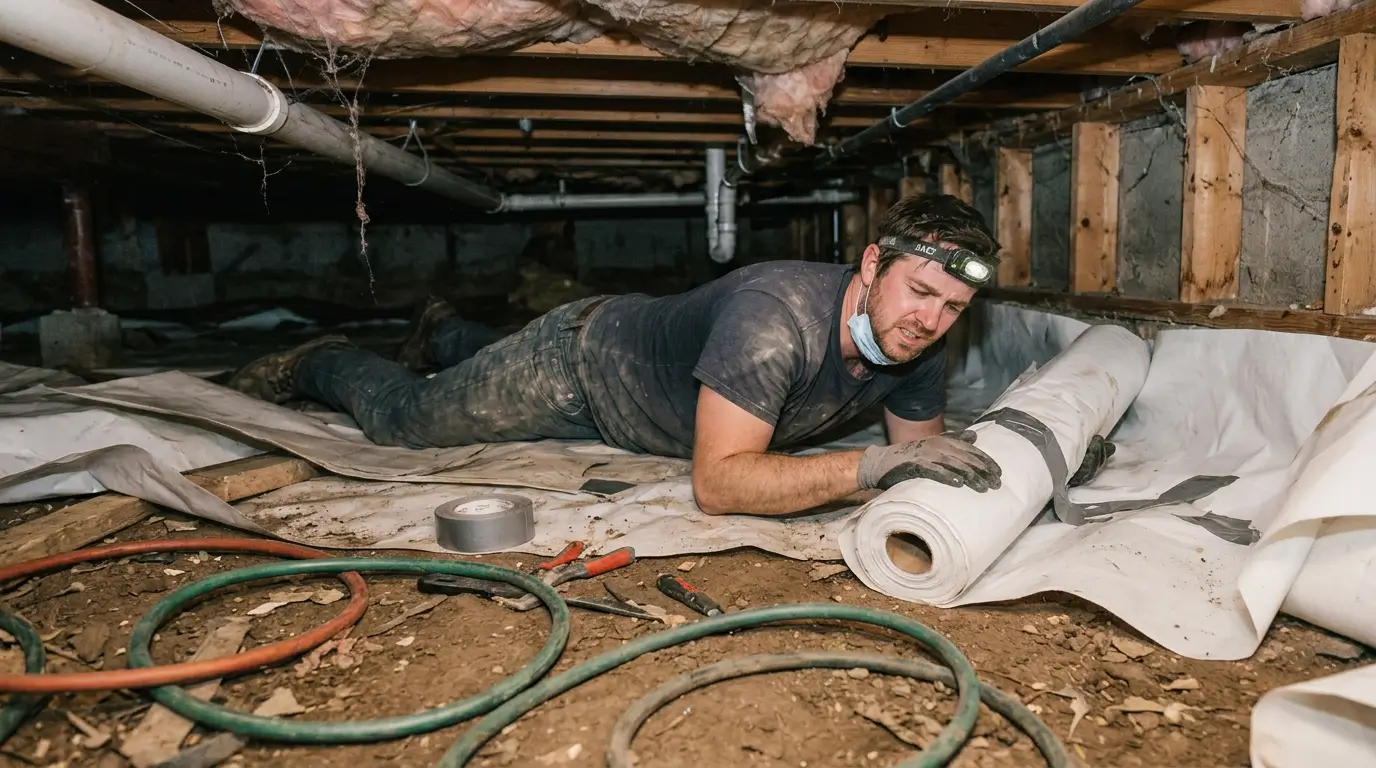
- Physical labor: You work on your back in a tight, dirty space, cutting around piers, HVAC lines, and plumbing.
- Access risk: Low clearances, sharp debris, and wet soil make it easy to tear the liner as you install it.
- Hidden conditions: Puddles after rain, wood rot, and mold are easy to miss until you are already mid-project.
- No warranty: If humidity stays high or water pools under the plastic, there is no installer to call back.
If you only compare the cost of plastic to a professional bid, DIY wins. If you compare a sealed, drained, dehumidified crawl space to a loosely laid sheet, the comparison changes.
Key Differences in Materials
Retail and commercial barriers are not interchangeable. Thickness, reinforcement, and how seams are closed determine whether the liner lasts or fails in the first wet season.
| Feature | Typical DIY / retail | Professional encapsulation |
|---|---|---|
| Barrier | Thin 4–6 mil hardware-store polyethylene | Multi-layer, reinforced 12–20 mil liner |
| Durability | Tears at seams, piers, and crawl paths | Resists puncture from soil, fasteners, and traffic |
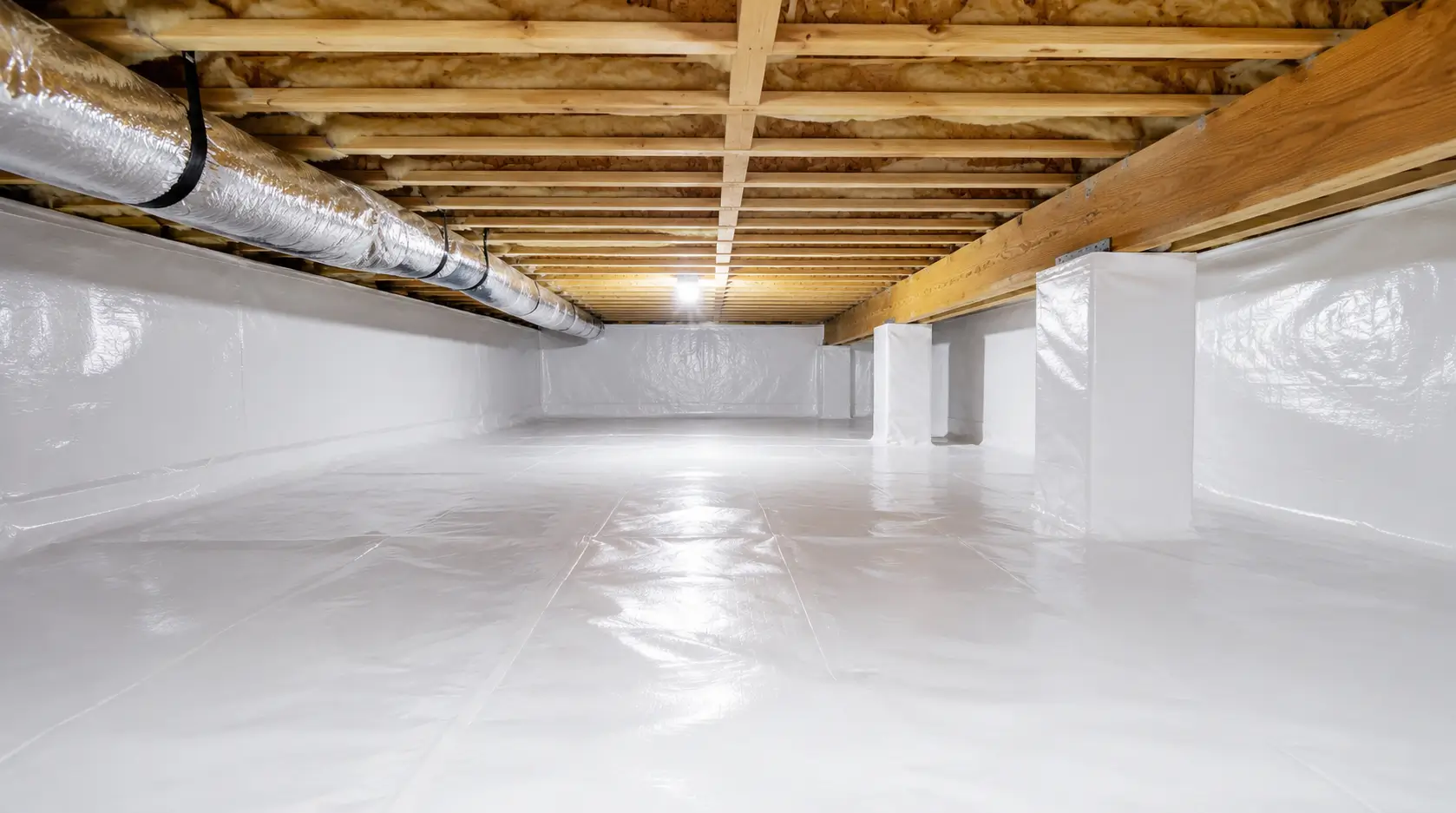
| Coverage | Often floor-only, loosely overlapped | Floor, walls, and piers; seams taped and sealed |
| Vents | Left open or loosely stuffed | Permanently sealed as part of the air barrier |
| Moisture control | Relies on the plastic alone | Barrier plus drainage, waterproofing, and a dehumidifier when needed |
| Combustion safety | Easy to overlook | Checked before vents are sealed |
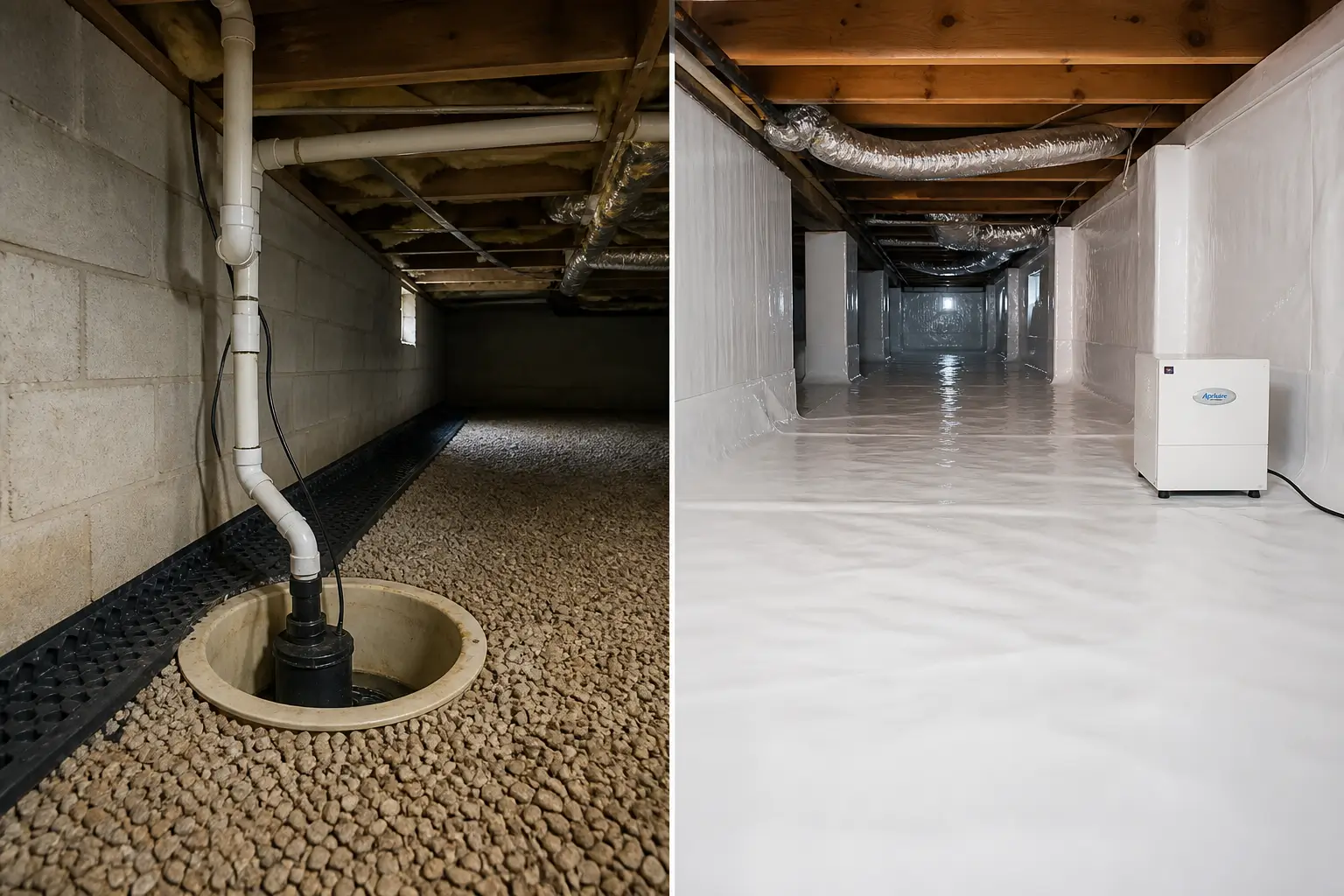
A professional vapor barrier is designed to stay sealed under Northwest Indiana humidity, freeze-thaw cycles, and the occasional need to crawl back in for plumbing or HVAC service. Retail film is designed to cover soil in a garden bed or a temporary construction area. It sheds some vapor. It does not create a conditioned crawl space.
Seams are the other gap. Overlapped plastic without specialty tape and mechanical fastening is an invitation for ground moisture to sneak through every joint. Commercial liners are seamed watertight and run up foundation walls so the soil is fully isolated from the air under your floors.
Common DIY Pitfalls
Most failed DIY encapsulations share the same mistakes. They look finished from the hatch and still leave the house damp.
Unsealed foundation vents
Encapsulation and open vents fight each other. If vents stay open, humid summer air and winter drafts keep entering the space. The liner then sits under a wet, unconditioned air mass. Professional encapsulation treats vent sealing as part of the air barrier, not an optional extra.
Trapping active moisture
Plastic over wet soil or seasonal puddles does not stop water. It hides it. Moisture stays under the sheet, humidity still rises at every unsealed edge, and mold can grow on joists above a "finished" floor. If you see puddles after rain, you need waterproofing and drainage before any liner goes down. Our waterproofing vs. encapsulation guide covers why that sequence matters.
Improper drainage
A liner without a path for groundwater will wrinkle, float, or pond. Perimeter drains, a sump, and a clear discharge line belong under or beside the barrier when the water table or grading pushes liquid water into the crawl space. Skipping that step is the most common reason a DIY barrier has to be pulled out.
Ignoring combustion appliance safety
Furnaces, water heaters, and other fuel-burning equipment in or near the crawl space need combustion air and a safe exhaust path. Sealing vents and tightening the crawl space without checking those appliances can starve burners of air or change how flue gases leave the home. That is a carbon monoxide risk, not a cosmetic one. If you have atmospherically vented equipment, stop and get a professional evaluation before you close the space.
Other frequent misses: leaving piers and wall edges unsealed, skipping a dehumidifier, and covering mold instead of removing it.
When Professional Help Is Required
Some crawl spaces are not DIY candidates. Call a professional before you buy plastic if you have any of the following:
- Standing water. Puddles, mud, or a soggy floor after rain mean you need drainage and waterproofing first. A liner on top of that water will fail.
- Active mold. Visible growth on joists, insulation, or subfloor needs mold removal before encapsulation. Sealing a dirty space locks spores and moisture in.
- Sagging or spongy floors. Soft, bouncy, or uneven floors point to moisture-weakened joists. That is a structural repair issue, not a plastic-sheet issue.
- Very low clearance or extensive debris. Tight spaces and sharp rubble make a durable, fully sealed install nearly impossible without the right crew and materials.
- Combustion appliances in the crawl space. Vent sealing has to be planned around safe combustion and makeup air.
If you are unsure which category your home falls into, start with the warning signs a crawl space needs repair. Encapsulation pays off when the space is dry, clean, and structurally sound — or when a contractor can get it there first.
So, Is DIY Encapsulation Worth It?
DIY can make sense only in a narrow case: a dry, accessible crawl space with no standing water, no mold, no structural damage, and no combustion-air complications — and even then, retail film is a partial vapor cover, not a full encapsulation.
For most Northwest Indiana homes, professional encapsulation is the better value. You get a reinforced liner, sealed vents, correct drainage when needed, humidity control, and an install that does not have to be ripped out after the next wet spring. That is how you get the benefits of encapsulation instead of a plastic floor that still smells musty.
Northwest Crawl Space Repair inspects crawl spaces across Portage, Valparaiso, Crown Point, Hobart, and surrounding communities. We tell you whether a simple barrier is enough or whether drainage, mold treatment, or structural work has to come first.