Most homeowners never think about their crawl space — until something goes wrong. Hidden beneath your home, the crawl space plays a critical role in your home's structural integrity, air quality, and energy efficiency. When problems develop there, they rarely stay hidden for long.
Here are the eight most common signs that your crawl space is due for a professional inspection or repair.
1. Musty Odors and Poor Indoor Air Quality
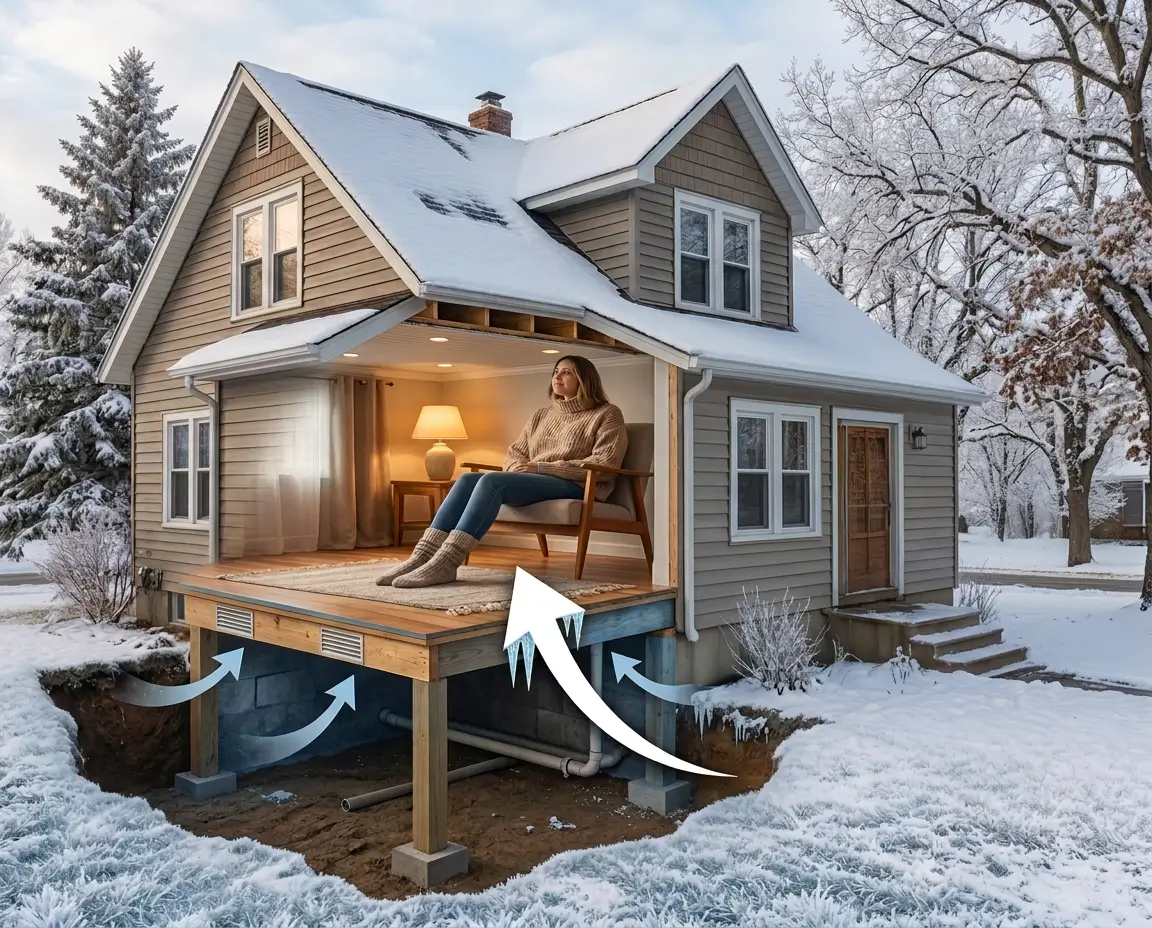
If your home has a persistent musty smell that worsens in humid months, your crawl space is likely the culprit. Because air moves upward through a home (a phenomenon known as the "stack effect"), air from your crawl space makes up a significant portion of the air you breathe indoors.
Musty odors are almost always a sign of moisture accumulation, decaying wood, or mold growth beneath the floor. Worsening allergy symptoms, headaches, or respiratory irritation are additional red flags. A mold inspection and remediation service can identify and eliminate the source before it spreads further into your living space.
2. Visible Mold or Mildew Growth
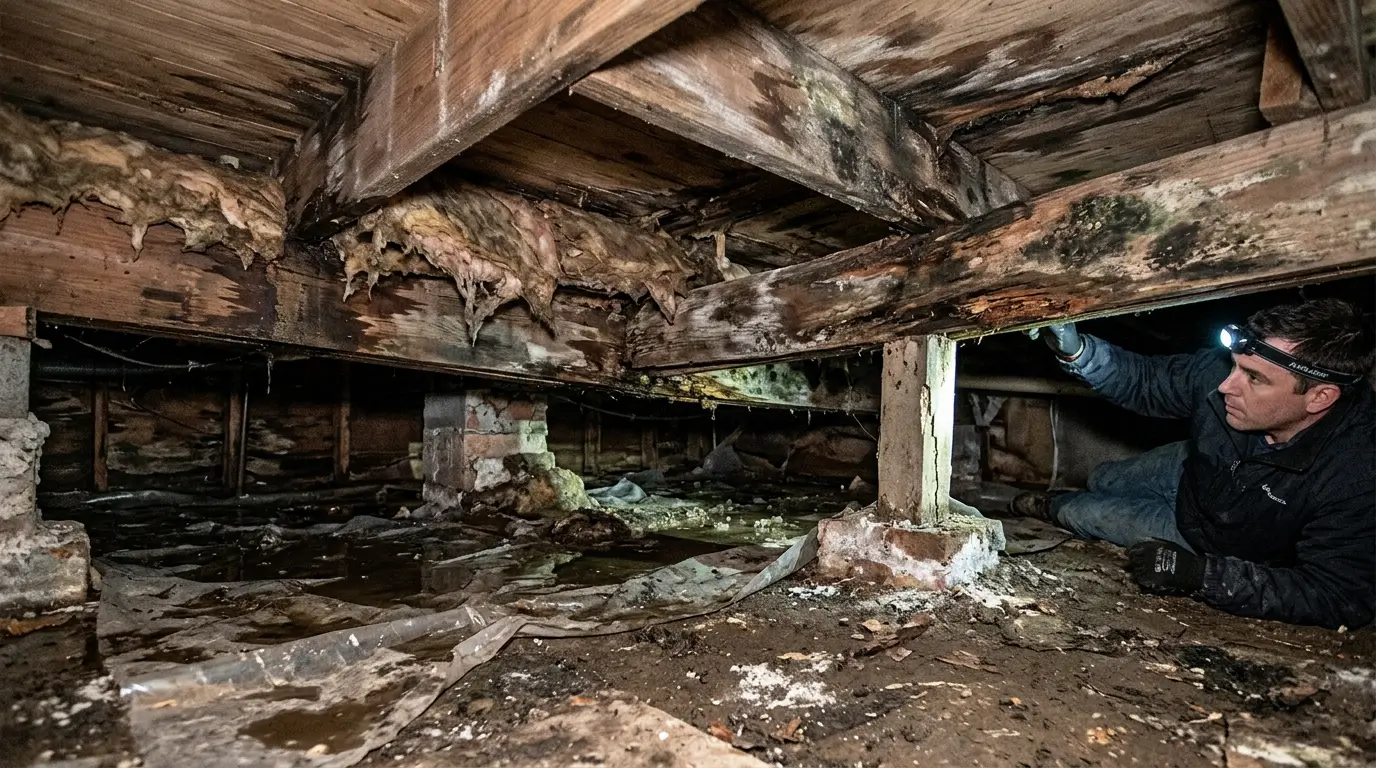
Mold thrives in dark, damp, poorly ventilated spaces — a perfect description of most untreated crawl spaces. If you've ever peeked into your crawl space and noticed black, green, or white fuzzy growth on the floor joists, insulation, or subfloor, that's active mold and it needs to be addressed immediately.
Left untreated, mold spreads to structural wood, weakens it, and circulates spores into your living area. Professional mold removal stops the growth and treats the wood surfaces to prevent recurrence.
3. Standing Water or Persistent Moisture
Water pooling in your crawl space after rain — or moisture that never fully dries — is one of the most damaging conditions a home can have. Water intrusion accelerates wood rot, promotes mold growth, attracts pests, and can compromise your foundation over time.
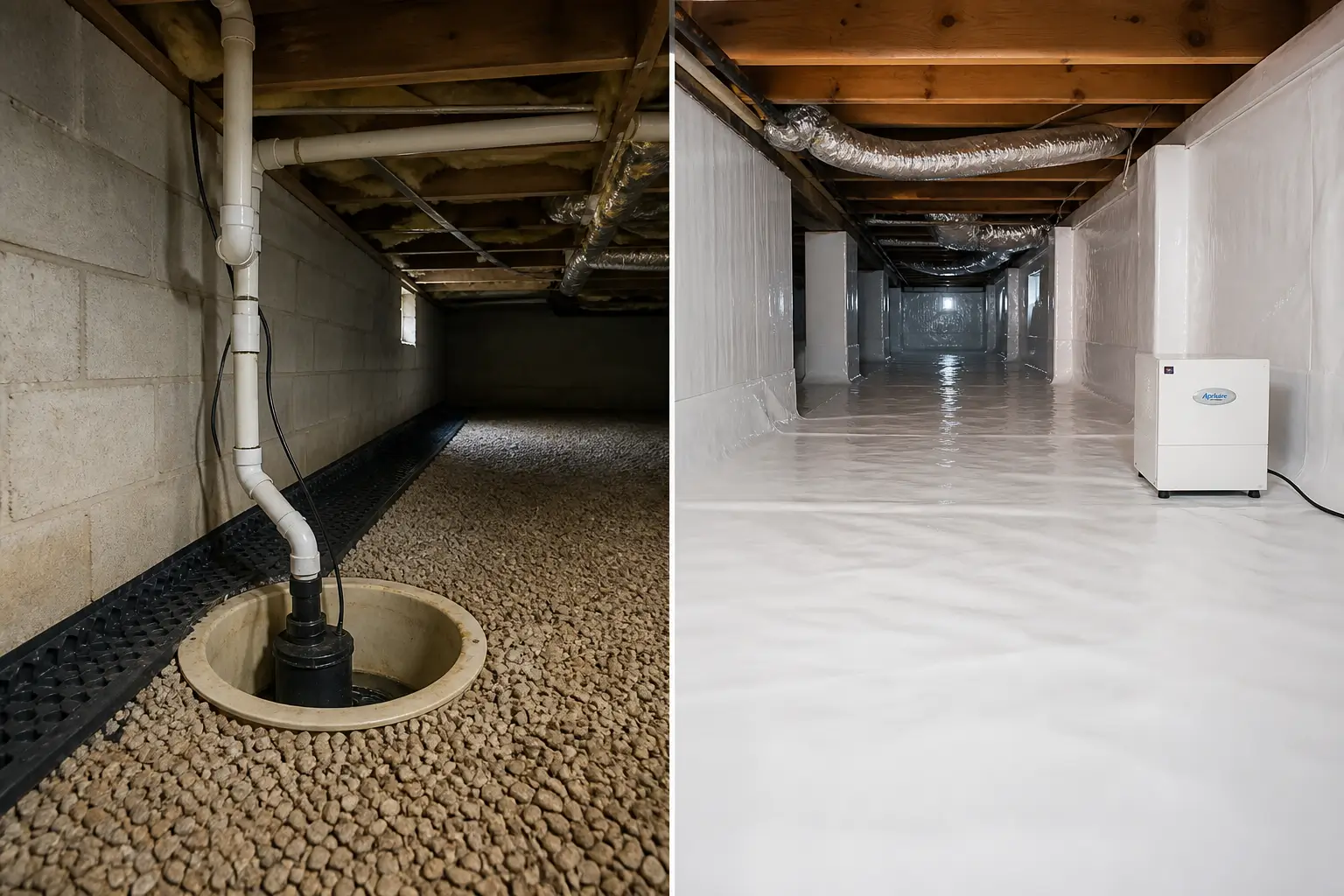
The sources vary: inadequate grading around the home, poor gutters, a high water table, or cracked foundation walls. Solutions range from interior drainage systems that channel water away from the space to full crawl space waterproofing that seals out moisture at its source.
4. Sagging, Soft, or Bouncy Floors
Walk across your floors and pay attention to how they feel. Do they sag in certain spots? Feel soft or spongy underfoot? Bounce slightly when you step? These are signs that the wood subfloor or structural floor joists beneath have absorbed moisture and begun to deteriorate.
This is a structural issue that only gets worse with time. In advanced cases, joists may need sistering or full replacement. Structural crawl space repairs stabilize the floor system and prevent the damage from spreading to adjacent framing.
5. High Energy Bills
Your energy bills should stay relatively consistent from season to season (accounting for weather). If your heating or cooling costs have crept up unexpectedly, a compromised crawl space could be to blame.
An uninsulated or poorly insulated crawl space allows conditioned air to escape through the floor and lets outside temperatures in. Upgrading crawl space insulation keeps your HVAC system from working overtime. For maximum energy performance, pairing insulation with full encapsulation creates a sealed, conditioned environment that significantly reduces heat loss and moisture infiltration.
6. Pest Infestations
Rodents, insects, and other pests love crawl spaces. They're dark, sheltered, and — when moisture is present — attract the insects that rodents feed on. If you're hearing scratching in the floors, finding droppings near interior walls, or noticing unexplained damage to insulation, your crawl space has likely been colonized.
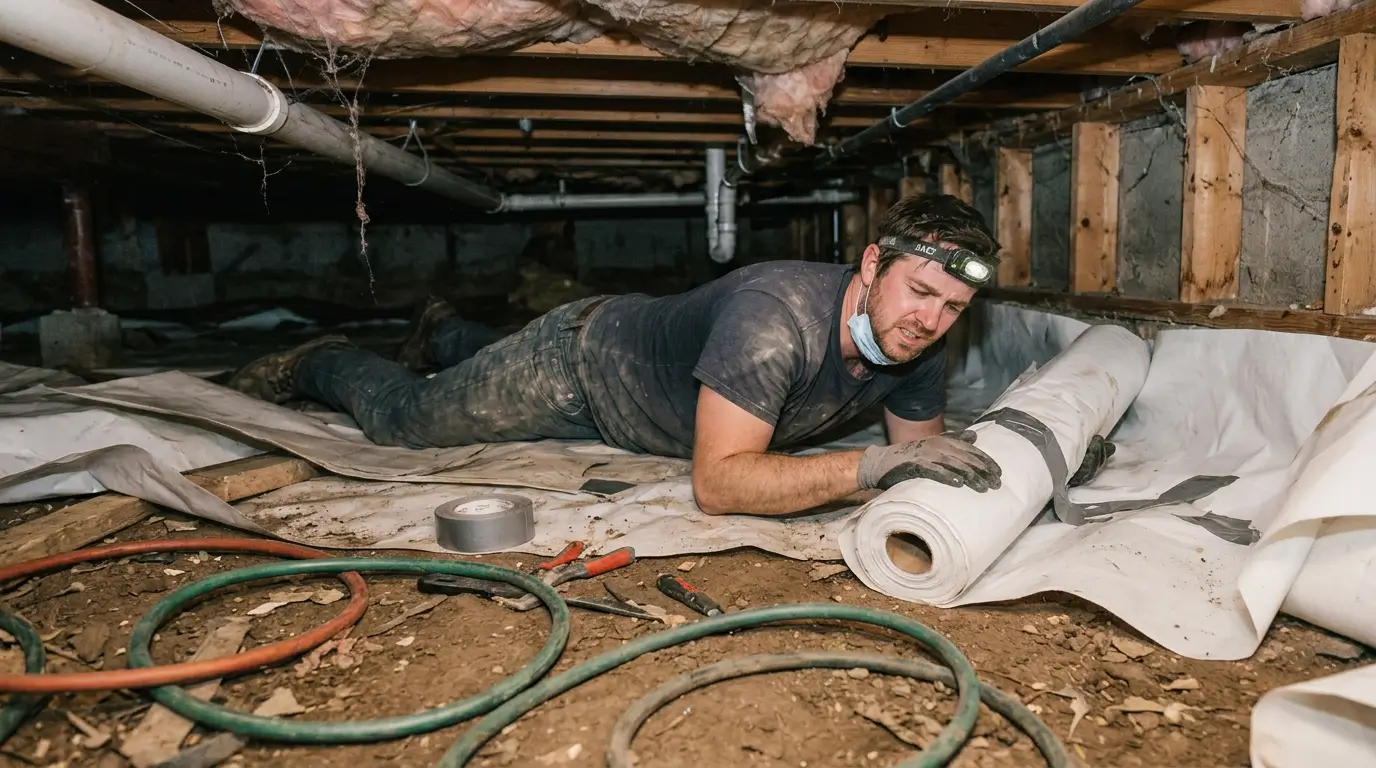
Installing a heavy-duty vapor barrier removes the moist, hospitable environment pests prefer. Combined with proper sealing of vents and entry points, this dramatically reduces pest activity without ongoing exterminator costs.
7. Efflorescence on Foundation Walls
Efflorescence is the white, chalky mineral deposit that appears on concrete or masonry when water moves through it and evaporates on the surface. If you see this on your crawl space's foundation walls, it means water is actively migrating through the concrete.
While efflorescence itself isn't structurally dangerous, it's a reliable indicator of ongoing water intrusion. Over time, repeated wet-dry cycles can cause concrete to spall and crack. Crawl space waterproofing addresses the root cause by managing groundwater before it reaches the walls.
8. Condensation on Pipes or HVAC Equipment
Metal pipes, ductwork, and HVAC equipment in the crawl space are prone to condensation when warm, moist air meets cooler metal surfaces. If you've noticed dripping or corrosion on equipment in your crawl space, that's a sign of excessive humidity — and excessive humidity means ongoing moisture damage to every wood surface in the space.
What to Do Next
If you've noticed any of these signs, the best next step is a professional crawl space inspection. Many issues that seem major are entirely correctable with the right repair strategy — and catching them early keeps costs manageable.
Northwest Crawl Space Repair serves homeowners throughout Northwest Indiana. Our team can assess your crawl space, explain what we find in plain language, and give you a clear, honest repair recommendation.