Cold floors show up in Northwest Indiana as soon as the heat comes on. The room can feel fine at chest height while the floor under your feet stays cold. In homes around Portage and Valparaiso, that gap usually starts in the crawl space.
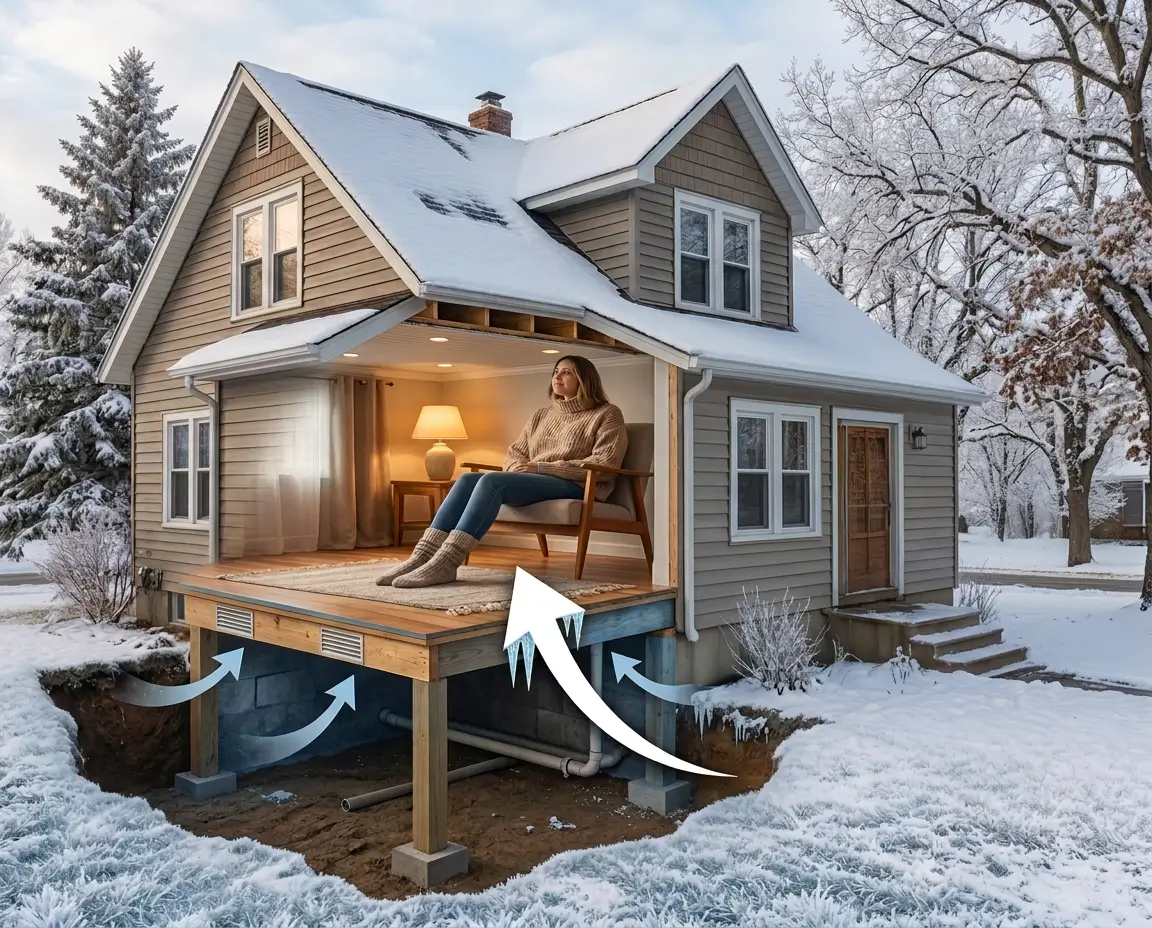
Heat leaves the first floor through the subfloor and the joists. Bare joists, or insulation that has fallen and gotten wet, leave crawl space air against the underside of the floor all winter. A rug upstairs does not stop that heat loss. The crawl space has to be dry, and the floor assembly needs crawl space insulation that is still doing its job.
How a Crawl Space Cools the Floor
The heating system warms the rooms. An open, bare crawl space under those rooms stays close to the outdoor temperature. Heat moves from the warm floor toward that colder space.
Two parts of the floor lose the most heat:
- Floor joists. Insulation belongs between the joists, tight to the subfloor. Gaps, crushed batts, and empty bays leave strips of floor with little resistance to heat flow.
- The rim joist. This is the band of framing where the floor meets the foundation wall. Cold outdoor air leaks in there and runs along the underside of the floor. Rooms on exterior walls often feel colder than the middle of the house for that reason.
Open crawl space vents add to the problem in winter. They were meant to let the space dry in milder weather. In a January freeze they pull outdoor air across the floor and the plumbing.
When Existing Insulation Stops Working
A lot of older homes already have batts in the joists. Age and moisture take them out of service. From the crawl space entrance, look for:
- Batts hanging down, lying on the soil, or missing in sections
- Insulation that is wet, matted, stained, or heavy
- Daylight or a draft at the rim joist
- A musty smell when the heat runs
Wet insulation loses R-value. It no longer slows heat moving through the floor. It also holds moisture against the joists and subfloor. Over enough wet seasons that moisture feeds mold and can soften the wood enough to need structural repairs.
Wet or moldy batts should come out. New insulation goes in only after the moisture source is handled.
Dry the Crawl Space Before You Insulate
Insulation in a damp crawl space traps water against the wood. The new material sags, heat loss returns, and mold has something to grow on. New insulation does not go in over active water problems. Get the moisture out first.
Standing Water or Seepage
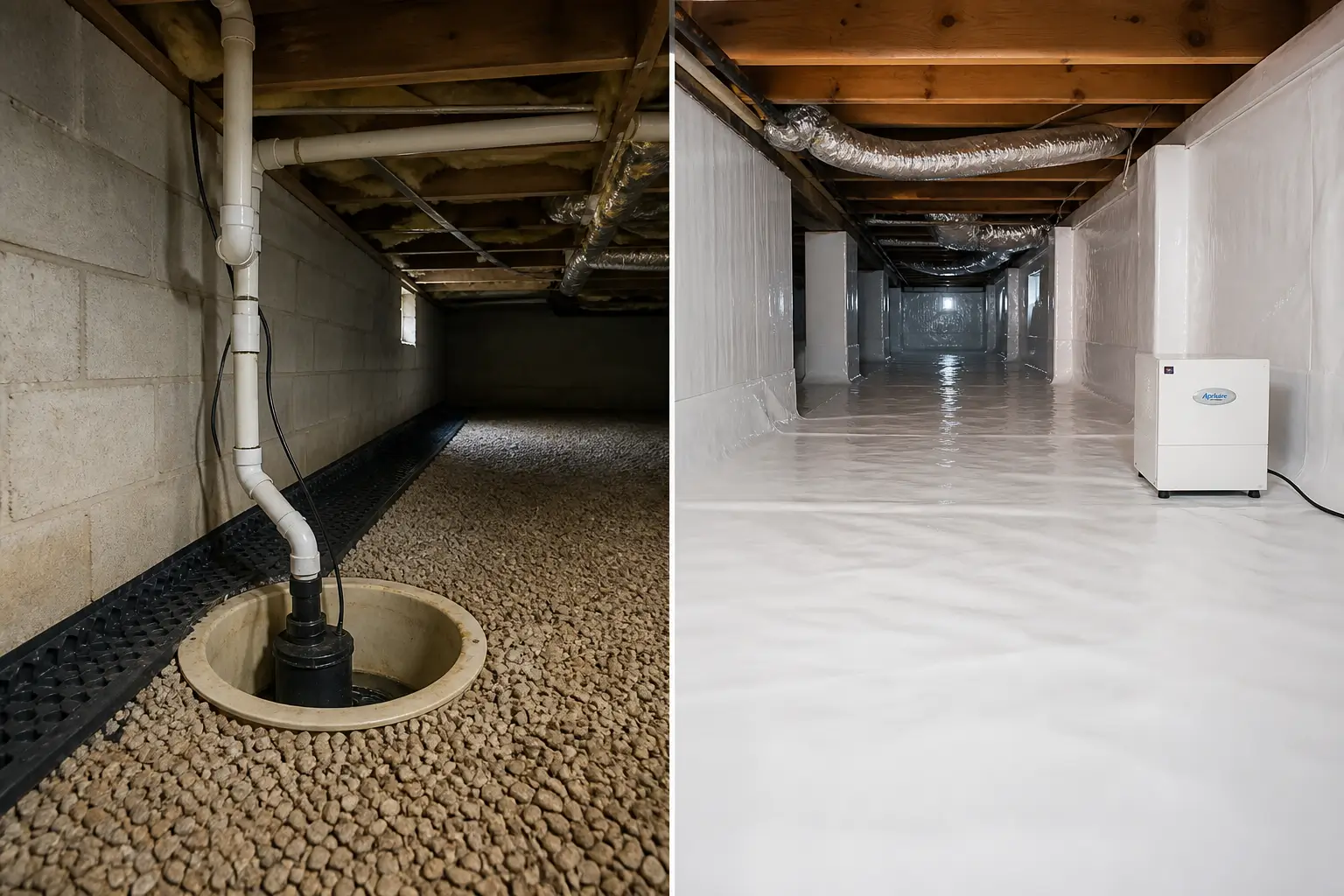
Groundwater and rain that enter after a storm have to leave before any insulation goes in. An interior drainage system collects that water and pumps it away from the house. Where foundation walls leak, or the water table pushes up through the soil, waterproofing is what stops the liquid water.
Ground Vapor Without Puddles
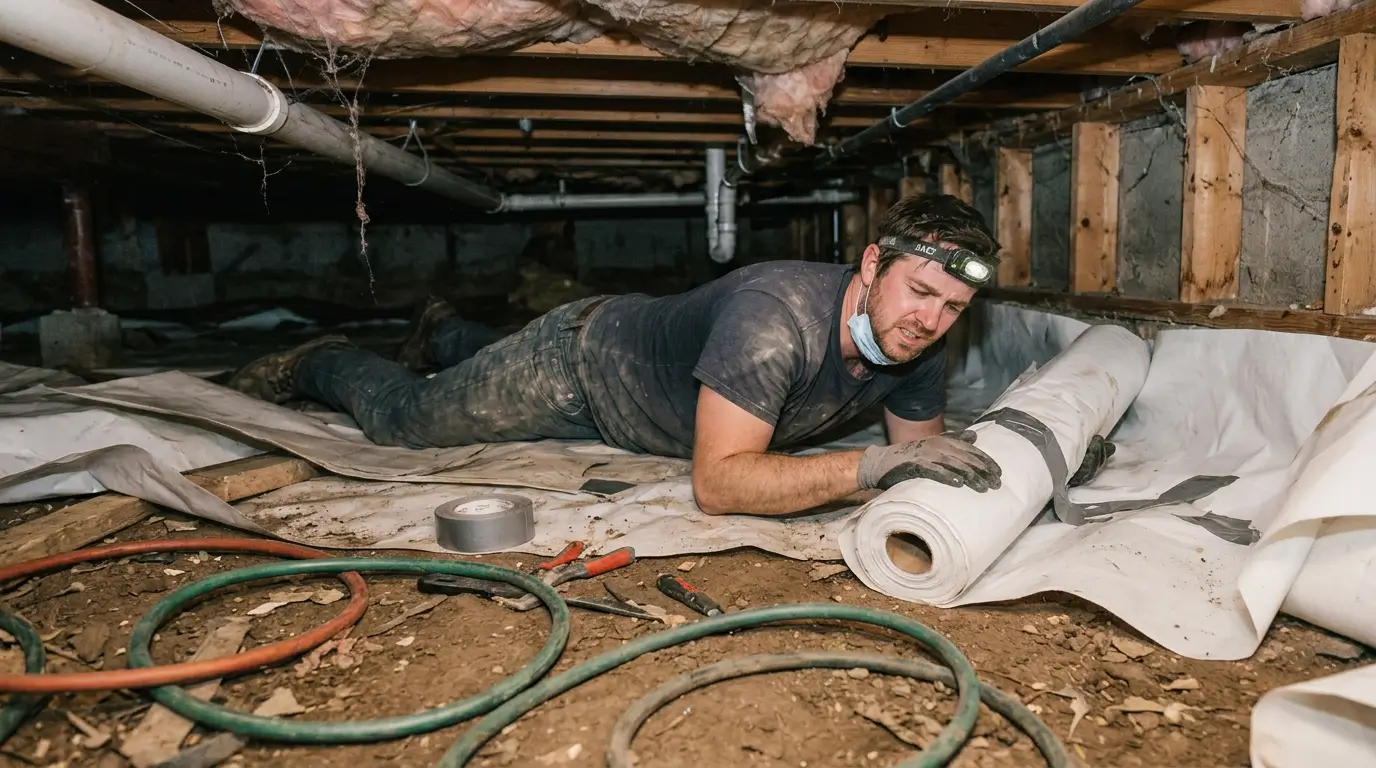
Bare dirt releases water vapor all year, even when you never see a puddle. A sealed vapor barrier blocks that vapor. The liner we install is reinforced polyethylene, typically 12–20 mil, overlapped and taped at the seams and up the foundation walls. Thin hardware-store plastic tears and leaves gaps at the piers.
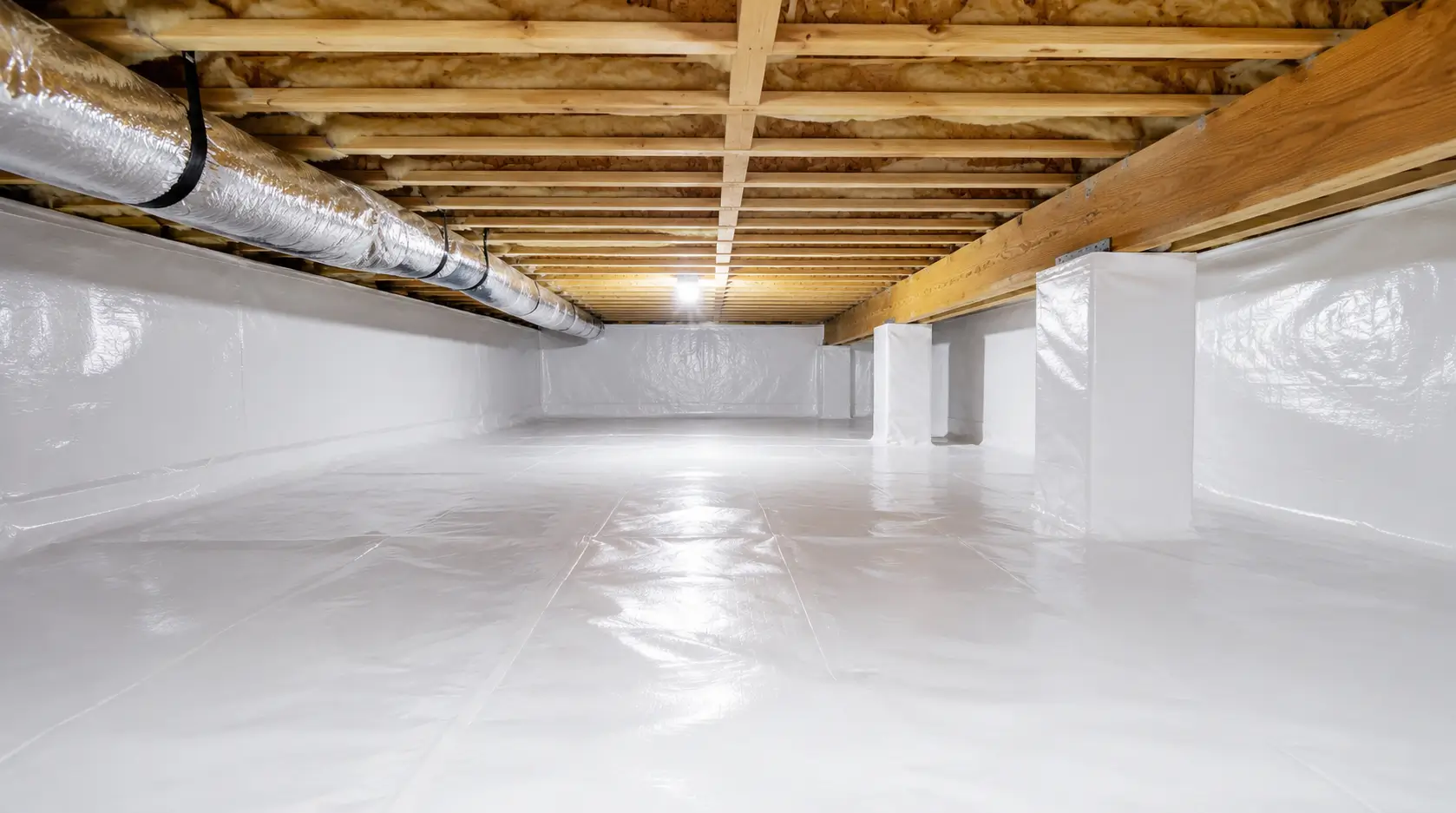
Full encapsulation goes further. The liner covers the floor and walls, the vents are closed, and the air in the space can be kept dry. Insulation lasts longer in that environment than it does over open ground.
Mold on the Wood or Old Insulation
Contaminated batts come out, and the wood is treated, before anything new is closed in. A liner or a fresh layer of insulation over active mold keeps the growth in the house and in the air that rises through the floor.
After the space is dry, insulation goes between the floor joists and at the rim joist, where the air leaks are.
Heating Bills and Frozen Pipes
The heating system runs longer to replace heat that left through the floor. Ductwork in an open crawl space loses more of that heat before the air reaches the registers.
Supply lines in the same space sit in that cold air. Homes with missing insulation and open vents are the ones that deal with frozen pipes in a hard freeze. Insulation is not a substitute for protecting an exposed pipe in a still-vented crawl space. A dry crawl space, with vents closed and the rim joist sealed, keeps plumbing and ducts out of outdoor air.
Summer has the same path in reverse. Humid outdoor air enters a vented crawl space, and an uninsulated floor lets heat into the house. Insulation paired with a vapor barrier or encapsulation slows that gain too.
What to Check Before Heating Season
If you can enter the crawl space safely, a flashlight answers most of the question:
- Are the joist bays filled, or can you see bare subfloor?
- Is any insulation wet, on the ground, or stained?
- Is there standing water, mud, or a water line on the foundation?
- Do you see mold, or smell it when the access door opens?
- Are the vents open to the weather?
Water, mold, or soft wood means moisture work comes first. Bare or fallen insulation in a dry space is an insulation job. Many houses need both, in that order. Access, square footage, and how much old material has to come out all change the scope. The price comes from an on-site inspection.
Northwest Crawl Space Repair inspects crawl spaces across Northwest Indiana and installs insulation after the space is ready to stay dry.